Risk Analysis for EPC Tenders: How to Identify Project Risks Before You Bid
5 min read
 Team FuturixAI
Engineering, Procurement, and Construction (EPC) projects are among the largest and most complex opportunities in government procurement. These contracts often involve substantial investments, multiple stakeholders, strict compliance requirements, and long execution timelines. While winning an EPC tender can significantly grow a business, it also exposes companies to considerable financial, technical, legal, and operational risks.
Many organizations focus primarily on preparing competitive pricing and technical proposals while overlooking the risks hidden inside tender documents. These overlooked risks often become costly after the contract is awarded.
A proper risk analysis helps procurement teams understand the challenges associated with a project before committing valuable time and resources. Combined with AI-powered tender analysis, businesses can identify potential issues much faster and make more informed Go/No-Go decisions.
In this guide, we'll explore the importance of risk analysis for EPC tenders and explain how AI helps businesses evaluate projects with greater confidence.
Why Risk Analysis Is Essential for EPC Projects
Unlike smaller procurement contracts, EPC projects usually involve complete project delivery—from engineering and procurement to construction and commissioning.
These projects often span several months or even years and require significant coordination across engineering, procurement, finance, legal, project management, and operations teams.
Without a structured risk assessment, companies may underestimate project complexity, commit to unrealistic timelines, or overlook contractual obligations that affect profitability.
Risk analysis helps organizations understand potential challenges before deciding to bid.
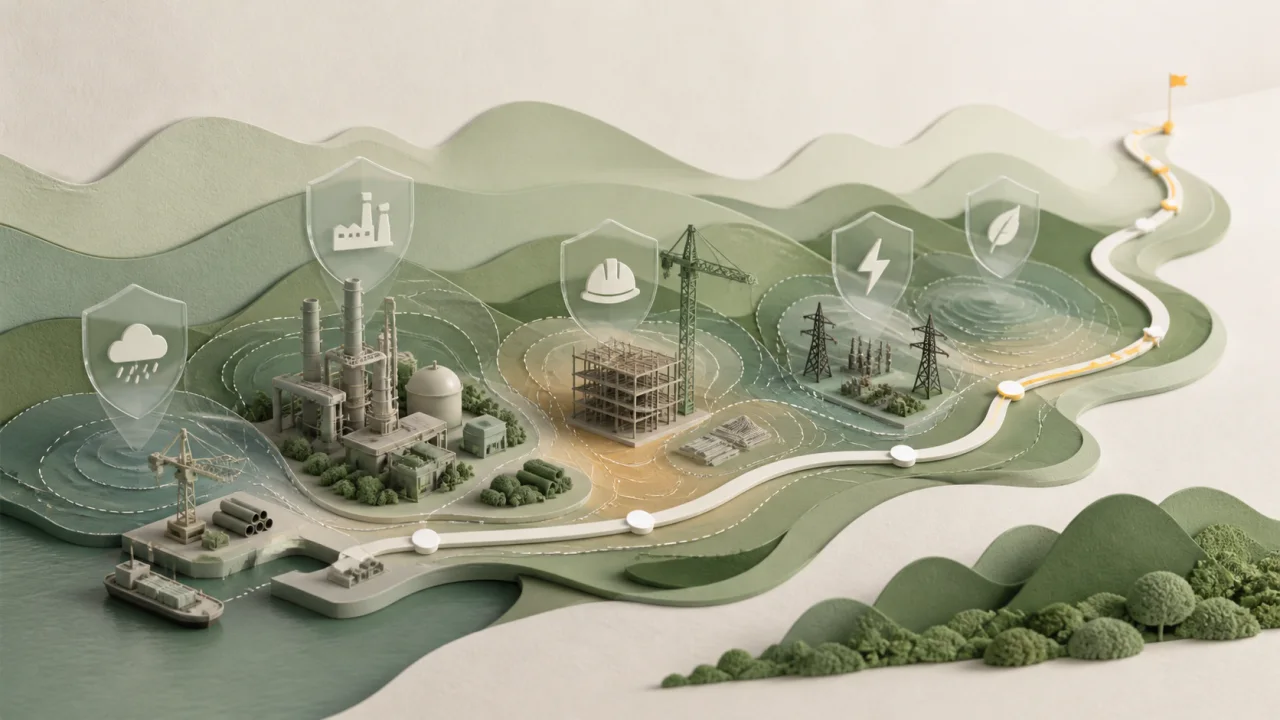
Types of Risks in EPC Tenders
Every EPC tender contains a unique combination of risks.
The most common categories include:
- Technical risks
- Commercial risks
- Financial risks
- Legal risks
- Operational risks
- Compliance risks
- Schedule risks
- Resource risks
A successful procurement strategy evaluates each category before proposal preparation begins.
Technical Risks
Technical risks arise when project specifications exceed a company's capabilities or contain unusually complex requirements.
Examples include:
- Advanced engineering requirements
- Specialized equipment
- Strict quality standards
- Challenging construction conditions
- Complex installation procedures
Engineering teams should review these requirements carefully before committing to the project.
Commercial Risks
Commercial clauses directly influence project profitability.
Important areas include:
- Payment schedules
- Retention amounts
- Liquidated damages
- Warranty obligations
- Price adjustment clauses
- Performance guarantees
Understanding these conditions early allows businesses to calculate the true financial impact of the project.
Financial Risks
Procurement teams should evaluate whether the project aligns with the company's financial capacity.
Review:
- Earnest Money Deposit (EMD)
- Performance security
- Cash flow requirements
- Payment milestones
- Mobilization advances
- Contract value
Large projects may require substantial working capital before payments are received.
Legal Risks
Legal review is equally important.
Tender documents often include clauses relating to:
- Contract termination
- Dispute resolution
- Arbitration
- Liability limits
- Insurance obligations
- Indemnity
Ignoring these conditions can expose businesses to unnecessary legal and financial risks.
Compliance Risks
Government procurement follows strict compliance requirements.
Businesses should verify:
- Mandatory certifications
- Registration requirements
- Previous experience
- Environmental compliance
- Safety standards
- Statutory obligations
Failure to satisfy compliance requirements can result in bid rejection.
Timeline Risks
Aggressive project schedules are common in EPC contracts.
Review:
- Project duration
- Delivery milestones
- Completion deadlines
- Inspection schedules
- Resource availability
Winning a project with unrealistic timelines may create operational challenges later.
Why Manual Risk Analysis Is Difficult
Large EPC tenders often exceed several hundred pages.
Reviewing technical specifications, commercial terms, legal clauses, drawings, and annexures manually takes considerable time.
Manual reviews also increase the likelihood of overlooking important conditions, particularly when procurement teams are managing multiple bids simultaneously.
As project complexity grows, manual risk assessment becomes increasingly inefficient.
How AI Improves Risk Analysis
AI Tender Analysis Software reviews procurement documents and identifies important clauses automatically.
Instead of manually searching through hundreds of pages, AI extracts information relating to:
- Eligibility
- Technical requirements
- Commercial conditions
- Legal clauses
- Compliance obligations
- Submission deadlines
- Financial commitments
The system also highlights unusual or high-risk conditions that require additional review.
This enables procurement teams to evaluate EPC projects much faster.
Better Go/No-Go Decisions
Risk analysis directly supports better Go/No-Go decisions.
Rather than evaluating projects based only on contract value, businesses can assess whether the opportunity aligns with:
- Technical capability
- Financial capacity
- Available resources
- Commercial objectives
- Long-term business strategy
Focusing on well-qualified opportunities improves both proposal quality and win rates.
How Tenderism Helps EPC Companies Assess Risk
Tenderism simplifies EPC procurement by combining AI-powered tender discovery with intelligent risk analysis and document review.
Instead of manually evaluating lengthy tender documents, procurement teams receive structured insights into technical, commercial, financial, and legal risks.
With Tenderism, you can:
- Analyze EPC tender documents in minutes
- Identify technical and commercial risks automatically
- Review eligibility and compliance requirements
- Track corrigenda and tender amendments
- Monitor submission deadlines
- Organize bids from one centralized dashboard
- Collaborate across engineering, procurement, finance, legal, and project management teams
By combining AI Tender Discovery, AI Tender Analysis Software, Government Tender Software, AI Proposal Management Software, and Enterprise Tender Automation, Tenderism helps EPC companies reduce uncertainty while improving bidding decisions.
Final Thoughts
EPC projects offer significant business opportunities, but they also involve substantial risks that should never be overlooked. A structured risk analysis helps businesses evaluate technical complexity, commercial viability, legal obligations, compliance requirements, and operational challenges before investing in proposal preparation.
As tender documents become larger and more complex, AI is making risk assessment faster, more accurate, and easier to manage.
If your organization wants to strengthen its procurement strategy, Tenderism provides an intelligent platform for AI-powered risk analysis, tender discovery, document review, bid management, and procurement automation.
With Tenderism, your team can identify project risks early, make smarter Go/No-Go decisions, and pursue EPC opportunities with greater confidence.