Tender Document Comparison: How AI Helps Businesses Compare Government Tenders Faster
5 min read
 Team FuturixAI
Government procurement is rarely a one-document process. A single tender may include the original bid document, technical specifications, commercial schedules, annexures, drawings, corrigenda, clarification notices, and supporting files. As the bidding period progresses, procurement authorities may release several amendments that modify important sections of the tender.
For procurement teams, keeping track of these changes is one of the most challenging parts of preparing a compliant proposal. Comparing multiple versions of lengthy documents manually is time-consuming and increases the risk of missing critical updates.
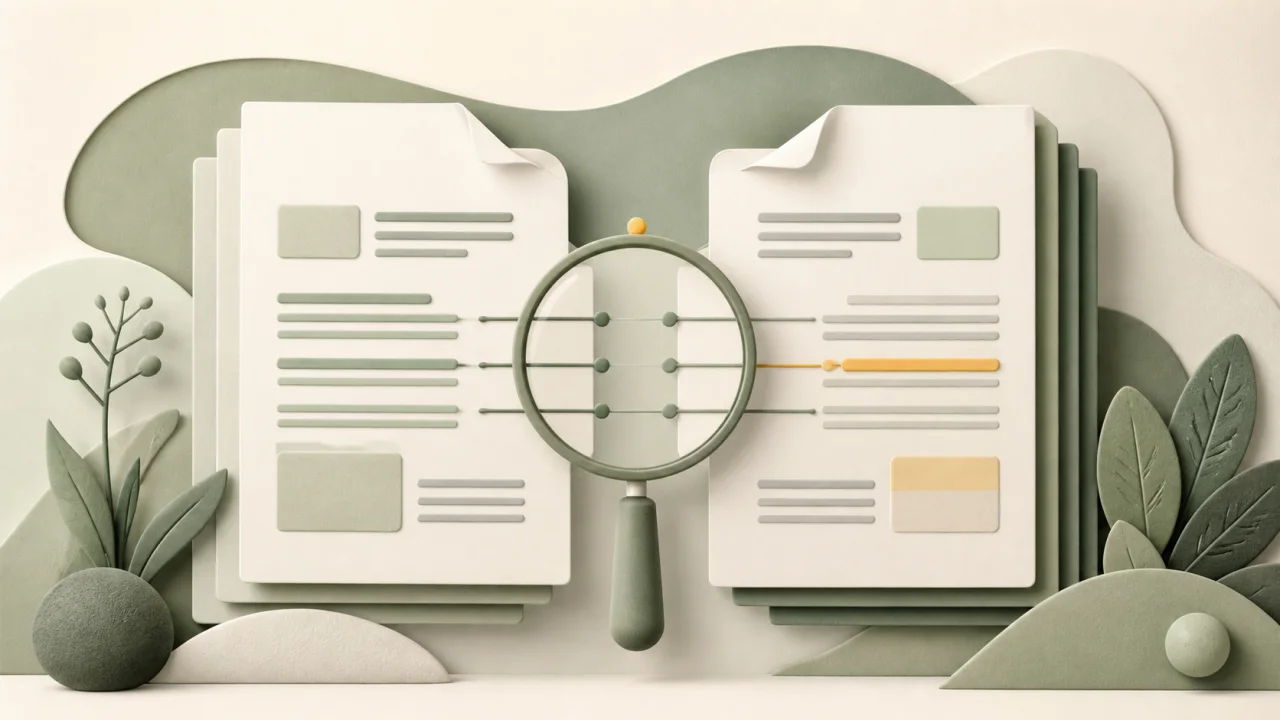
Artificial Intelligence is transforming this process by automatically comparing tender documents, identifying changes, and highlighting the sections that require attention. Instead of reviewing hundreds of pages line by line, procurement teams receive a clear summary of what has changed and how it affects their bid.
In this guide, we'll explain why tender document comparison is important, the challenges of manual reviews, and how AI makes the process faster, more accurate, and more efficient.
What Is Tender Document Comparison?
Tender document comparison is the process of identifying differences between two or more versions of a government tender.
These comparisons may involve:
- Original tender vs corrigendum
- Initial technical specifications vs revised specifications
- Draft contract vs final contract
- Previous tender vs new tender
- Multiple versions of the same document
The objective is to identify every change that could affect proposal preparation, pricing, compliance, or project execution.
Why Document Comparison Matters
Government tenders often change after publication.
Procurement authorities may revise:
- Technical specifications
- Eligibility requirements
- Submission deadlines
- Commercial terms
- Contract conditions
- Mandatory documentation
Even a small change can have a significant impact on your proposal.
Without a proper comparison process, businesses risk preparing bids using outdated information.
Common Documents That Need Comparison
Procurement teams frequently compare:
- Tender notices
- Technical specifications
- Scope of work
- Commercial schedules
- Bill of quantities
- Contract conditions
- Annexures
- Corrigenda
- Clarification documents
Each document may introduce changes that influence bidding decisions.
Challenges of Manual Comparison
Comparing government tender documents manually is rarely straightforward.
Some common challenges include:
- Reviewing hundreds of pages
- Comparing multiple PDF files
- Identifying small wording changes
- Tracking multiple corrigenda
- Managing different document versions
- Coordinating updates across departments
As projects become larger and procurement activity increases, manual comparison consumes valuable time.
Why Small Changes Matter
Not every amendment is obvious.
Sometimes a single sentence changes:
- A qualification requirement
- A payment milestone
- A delivery deadline
- A warranty condition
- A technical specification
Although these changes may appear minor, they can significantly affect proposal preparation or even bidder eligibility.
This is why every revision deserves careful review.
How AI Compares Tender Documents
AI Tender Analysis Software automatically reviews multiple versions of procurement documents and highlights the differences.
Instead of manually searching page by page, AI identifies:
- Added clauses
- Deleted sections
- Modified technical specifications
- Revised commercial terms
- Updated eligibility requirements
- New compliance obligations
- Changed submission deadlines
The result is a structured comparison that clearly shows what has changed.
Faster Review of Corrigenda
One of the most valuable applications of AI document comparison is corrigenda analysis.
Whenever a procuring authority publishes an amendment, AI automatically compares it with the original tender and identifies:
- Revised technical requirements
- Updated project scope
- New documentation
- Commercial changes
- Eligibility revisions
- Extended deadlines
Procurement teams immediately understand how the amendment affects their proposal.
Improve Collaboration Across Departments
Different teams review different parts of a government tender.
Engineering focuses on technical specifications.
Finance reviews pricing and payment terms.
Legal evaluates contract clauses.
Procurement coordinates the overall submission.
AI-generated comparison reports allow each department to review only the sections that have changed instead of rereading the entire document.
This improves efficiency and reduces duplication of work.
Reduce Compliance Risks
Using outdated tender documents is one of the most common causes of non-compliant proposals.
AI comparison helps businesses ensure that:
- Every amendment has been reviewed
- Latest specifications are being followed
- Revised deadlines are updated
- Mandatory documents are included
- Proposal content reflects the latest tender version
This reduces the likelihood of administrative errors during submission.
Compare Previous Tenders
AI comparison isn't limited to amendments.
Businesses can also compare new tenders with previous procurement opportunities to identify:
- Changes in eligibility
- Updated technical requirements
- Revised evaluation criteria
- Buyer preferences
- Commercial differences
These insights help procurement teams prepare stronger bids based on previous procurement activity.
Why AI Is Becoming Essential
Government procurement generates a large volume of documentation.
Reviewing multiple versions manually slows proposal preparation and increases the risk of overlooking important changes.
AI enables procurement teams to identify differences within minutes instead of spending hours comparing documents line by line.
This allows organizations to respond faster while maintaining accuracy throughout the bidding process.
How Tenderism Simplifies Tender Document Comparison
Tenderism combines AI-powered document comparison with intelligent tender analysis to help businesses stay updated throughout the procurement lifecycle.
Instead of manually comparing multiple tender documents, your team receives structured summaries highlighting every important change.
With Tenderism, you can:
- Compare original tenders with corrigenda automatically
- Identify changes to technical, commercial, and legal clauses
- Review updated eligibility requirements
- Track submission deadline revisions
- Monitor document versions from one centralized dashboard
- Collaborate across procurement, engineering, finance, legal, and management teams
- Reduce manual comparison using AI-powered analysis
By combining AI Tender Discovery, AI Tender Analysis Software, Government Tender Software, AI Proposal Management Software, and Enterprise Tender Automation, Tenderism helps businesses simplify document comparison while improving bidding accuracy.
Final Thoughts
Tender document comparison is an essential part of government procurement. Even small amendments can affect technical compliance, pricing, eligibility, and submission requirements.
Manually comparing lengthy procurement documents is time-consuming and increases the likelihood of missing critical updates. AI provides a faster and more reliable approach by automatically identifying changes and presenting them in a clear, structured format.
If your organization wants to simplify document comparison and improve procurement efficiency, Tenderism offers an intelligent platform for AI-powered tender analysis, document comparison, bid management, collaboration, and procurement automation.
With Tenderism, your team can stay aligned with every tender update, reduce compliance risks, and prepare stronger government bids with confidence.